
Want to study smarter and get better results? These proven techniques will help you focus, retain more information, and succeed faster.

Introduction
Studying can feel overwhelming, especially when you’re unsure which methods actually help you learn. Many students spend hours rereading notes or cramming, only to forget everything later. The truth is, effective studying isn’t about working harder—it’s about working smarter.
In this guide, you’ll learn 10 proven study techniques that improve focus, boost memory, and help you retain information long-term.
1. Use the Pomodoro Technique
The Pomodoro Technique is a time-management method that helps you stay focused without getting burned out.
Study for 25 minutes, then take a 5-minute break. After four sessions, take a longer break (15–30 minutes).
This works because your brain can focus better in short bursts, and regular breaks prevent mental fatigue.
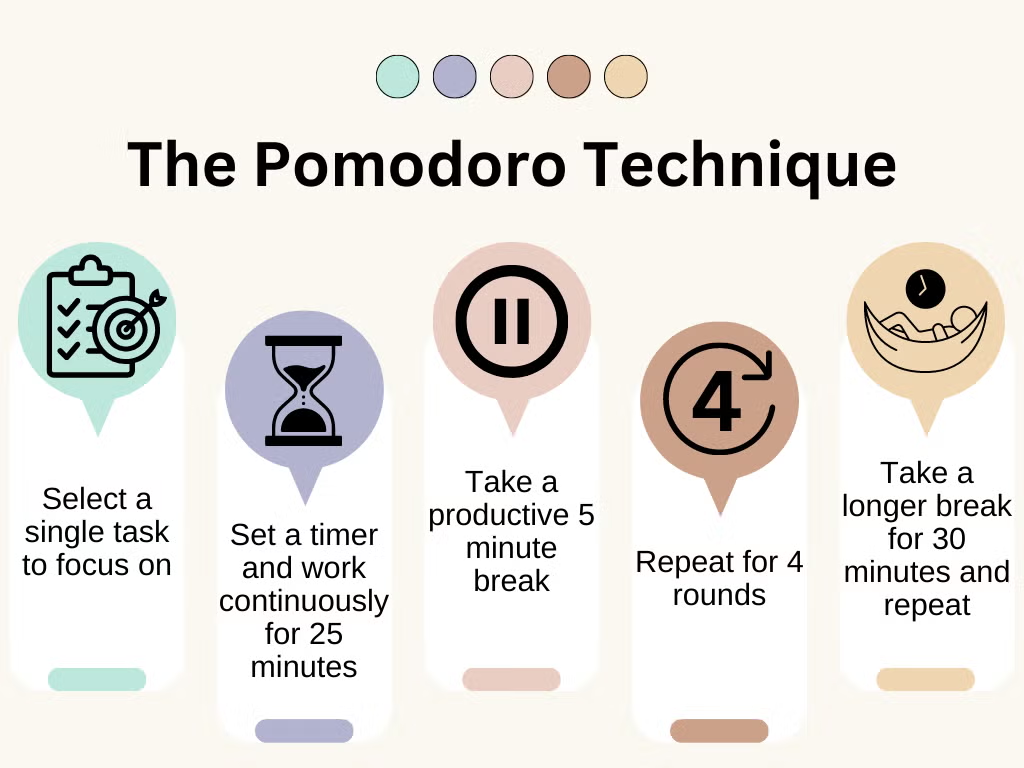
Structure of The Pomodoro Technique
2. Teach What You Learn
One of the best ways to truly understand something is to explain it. This is often called the Feynman Technique.
After studying a topic, try teaching it to:
- A friend
- A family member
- Or even out loud to yourself
If you can’t explain it simply, you don’t fully understand it yet.
3. Remove Distractions
Distractions are one of the biggest enemies of productivity. Even checking your phone for a few seconds can break your focus.
Try this:
- Put your phone in another room
- Use apps that block social media
- Study in a quiet, clean environment
The fewer distractions you have, the more effective your study time will be.
4. Study in Short Sessions
Long study sessions often lead to burnout and reduced focus. Instead, break your studying into shorter sessions throughout the day.
For example:
- 30–45 minutes per session
- Multiple sessions per day
This helps your brain process and store information more efficiently.
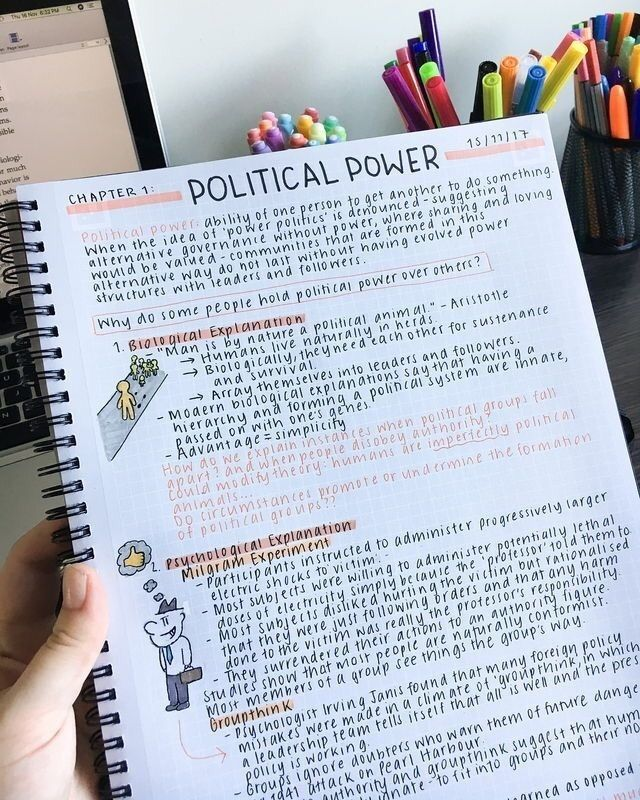
5. Take Notes by Hand
Writing notes by hand forces your brain to actively process information instead of passively copying it.
Instead of writing everything word-for-word:
- Summarize key points
- Use bullet points
- Highlight important ideas
This improves understanding and memory retention.
6. Use Active Recall
Active recall is one of the most powerful study techniques. Instead of rereading your notes, test yourself.
Try:
- Flashcards
- Practice questions
- Covering your notes and recalling information
This strengthens your memory and helps you remember information during exams.
7. Space Out Your Studying
Cramming might work short-term, but it doesn’t help with long-term memory.
Instead, use spaced repetition:
- Study a topic
- Review it the next day
- Then again after a few days
Spacing out your studying helps your brain retain information much longer.
8. Get Enough Sleep
Sleep plays a huge role in learning and memory. When you sleep, your brain processes and stores what you studied.
Aim for:
- 7–9 hours of sleep per night
Pulling all-nighters may seem productive, but it actually reduces your ability to remember information.
9. Stay Organized
Being organized saves time and reduces stress. When everything is in one place, you can focus more on studying instead of searching for materials.
Tips:
- Set clear study goals
- Keep notes organized by subject
- Use a planner or calendar
10. Stay Consistent
Consistency is the key to success. Studying a little every day is far more effective than cramming once a week.
Even 30–60 minutes of focused study daily can make a huge difference over time.
Conclusion
Improving your study habits doesn’t have to be complicated. By using these proven techniques, you can study more efficiently, retain more information, and feel more confident in your learning.
Start by applying just 2–3 of these tips, then gradually build better habits over time.
Frequently Asked Questions
How many hours should I study per day?
It depends, but most students benefit from 1–3 hours of focused study daily.
What is the best study method?
Active recall and spaced repetition are considered the most effective.